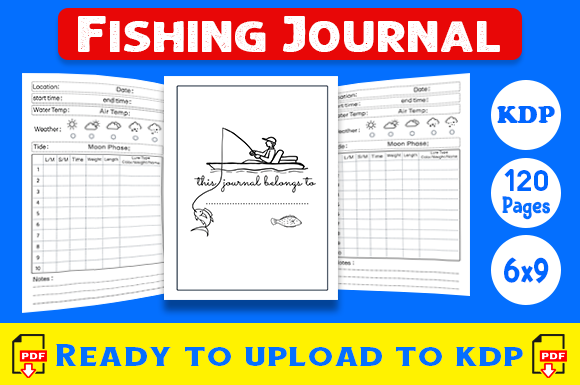
Fishing Journal: A Practical KDP Interior for Anglers
For many anglers, the difference between a good day on the water and a great season lies in the details. A fishing journal serves as more than just a diary of catches; it is a strategic tool for pattern recognition, skill development, and preserving memories. This specific Fishing Journal interior is designed to bridge the gap between personal record-keeping and professional publishing. Available as an instant PDF download formatted specifically for Amazon KDP, this 6×9 high-resolution template provides a structured foundation for anyone looking to create or use a dedicated logbook without starting from scratch.
Defining the Purpose of a Structured Logbook
At its core, this Fishing Journal is a pre-formatted interior file ready for upload to print-on-demand platforms. It eliminates the technical hurdles of book design, allowing users to focus entirely on content and utility. The 6×9 trim size is widely considered the industry standard for field guides and logbooks because it balances portability with adequate writing space. It fits easily into tackle boxes, backpacks, and boat compartments while offering enough surface area for detailed notes, sketches, and data entry.
The value of this resource shifts depending on who is using it. For a self-publisher, it represents a low-risk product asset. For an angler, it represents a tangible method for improving their craft. Understanding these distinct perspectives helps determine if this specific interior aligns with your current objectives, whether you are building a catalog of books or trying to understand why bass bite better during a new moon phase.
Perspectives for Publishers and Content Creators
For entrepreneurs, marketers, and KDP publishers, time is often the most significant constraint. Creating a high-quality logbook interior from zero requires graphic design skills, knowledge of print margins, and hours of testing. This Fishing Journal interior addresses the need for speed and reliability. Because the files have been tested on KDP, publishers can bypass the common rejection errors associated with bleed settings, margin violations, or resolution issues.
Commercial Viability and Niche Targeting
Publishers evaluating this interior should consider how it fits into a broader niche strategy. Fishing is not a monolith; it includes fly fishing, saltwater surf casting, ice fishing, and kayak angling. While this journal provides a versatile generalist structure, successful creators often customize the metadata and cover design to target specific sub-niches. The high-resolution nature of the PDF ensures that text remains crisp and lines stay sharp, which is critical for maintaining positive reviews and avoiding returns due to print quality complaints.
- Speed to Market: Instant download capability allows for same-day listing creation, enabling publishers to test market demand quickly.
- Risk Mitigation: Pre-tested files reduce the likelihood of account warnings or blocked uploads due to formatting errors.
- Scalability: A reliable base interior allows creators to focus marketing efforts on cover design and keyword research rather than repetitive layout work.
However, publishers must also weigh flexibility against convenience. If your brand requires highly specialized tracking fields unique to a specific region or species, a generic interior may require modification. Evaluating this product involves assessing whether the existing layout meets 80% of your needs or if customization would negate the time savings.
Utility for Anglers and Hobbyists
For the end-user—the angler holding the physical book—the priorities shift from commercial viability to practical application. Beginners often struggle with information overload. They may know they caught a fish, but fail to record the water temperature, barometric pressure, or lure color that made the difference. This Fishing Journal provides prompts and structured spaces that guide users toward capturing actionable data without feeling like a chore.
Skill Development Through Documentation
Experienced anglers and professionals use journals differently. They are less interested in basic prompts and more focused on long-term trend analysis. For this group, the consistency of a printed journal offers advantages over digital apps. There is no battery life to worry about, no glare from screens, and no risk of losing years of data to a server outage. The tactile experience of writing reinforces memory, helping seasoned fishermen internalize patterns that lead to tournament wins or successful guide trips.
- Pattern Recognition: Reviewing past entries during the off-season helps identify seasonal migrations and weather correlations.
- Gear Inventory: Tracking which lures and rigs produce results prevents unnecessary spending on ineffective equipment.
- Mentorship Tool: Parents and educators can use the journal to teach children or students about biology, patience, and scientific observation.
Hobbyists who enjoy the aesthetic aspect of angling also find value here. A well-maintained journal becomes a keepsake, documenting personal milestones and time spent in nature. Unlike a blank notebook, the pre-printed structure ensures that essential details aren't forgotten in the excitement of a catch, creating a richer historical record for future reflection.
Educational and Instructional Applications
Fishing instructors, camp counselors, and outdoor educators represent another distinct audience segment. For these users, the Fishing Journal serves as a curriculum aid. Teaching someone to fish involves transferring tacit knowledge that is difficult to verbalize. A structured journal gives students a framework for learning what matters. Educators can assign specific sections to complete after each outing, turning recreational time into active learning opportunities regarding ecology, meteorology, and responsible stewardship.
In this context, cost and durability become primary decision factors. Educators often need to purchase multiple copies or recommend affordable options to students. A KDP-printed journal typically sits at a lower price point than specialty leather-bound logs, making it accessible for group settings. The standardized format also makes grading or reviewing student progress easier, as everyone is recording data in the same manner.
Evaluating Quality and Technical Specifications
Regardless of your role, assessing the technical quality of this Fishing Journal interior is essential before committing to it. High resolution is non-negotiable for print products. Blurry lines or pixelated text degrade the user experience immediately. Since this product specifies high-resolution interiors, users should verify this by examining the preview or sample pages closely. Check that the grayscale values are rich enough to print clearly on standard white paper, which is typical for KDP logbooks.
The 6×9 trim size warrants specific consideration regarding binding and usability. This size is compact, but users should be aware of the gutter margin—the inner space where the book binds. A well-designed interior accounts for this, ensuring that writing prompts and tables do not disappear into the spine. When evaluating this PDF, look for ample inner margins that accommodate the page count you intend to publish. A 100-page journal will have a smaller gutter requirement than a 200-page volume, and ensuring the template matches your intended thickness prevents usability issues.
Making the Right Choice for Your Goals
Determining whether this Fishing Journal matches your needs requires honest self-assessment. If you are a publisher seeking a unique, proprietary product to build a premium brand, this ready-made interior might serve only as a starting point or a placeholder. However, if you are looking to validate a niche, expand a catalog efficiently, or provide a functional tool for a community, the trade-off between customization and convenience likely favors this solution.
For anglers and hobbyists, the decision rests on personal workflow. Do you prefer total creative freedom, or do you benefit from guided structure? Some users thrive with blank pages, while others abandon journaling because they forget what to write. This product caters to the latter group, providing the scaffolding necessary to build a lasting habit. Ultimately, the best fishing journal is the one that actually gets used, whether that means filling out every field meticulously or simply having a reliable place to jot down coordinates and memories before they fade.