KDP Sketchbook Blue: A Practical Interior for Low-Content Publishing
Creating a successful low-content book on Amazon KDP often comes down to the quality and specificity of the interior. The KDP Sketchbook Blue is designed to bridge the gap between generic blank journals and highly specialized art books. This interior provides a structured yet flexible canvas that appeals to a wide demographic of creators, students, and professionals. Unlike standard lined notebooks, this 6x9 inch sketchbook interior offers a dedicated space for visual thinking, making it a distinct product in a saturated marketplace. Understanding the real-world applications of this specific blue-themed interior helps publishers target the right audience and create covers that actually convert.
Visual Journaling and Mental Health Applications
One of the most significant use cases for the KDP Sketchbook Blue interior lies in the wellness and mental health niche. Art therapy and visual journaling have moved beyond clinical settings into mainstream self-care routines. Adults aged 20 to 50 are increasingly seeking tactile, screen-free methods to process emotions and reduce anxiety. The blue aesthetic of this interior naturally aligns with color psychology associated with calmness, stability, and focus.
When positioning this interior for the wellness market, consider how the user interacts with the page. The 120-page count is substantial enough to serve as a long-term companion for daily practice but light enough to remain portable for travel or commute. Users engaging in mindfulness exercises, gratitude mapping, or trauma processing often prefer unlined or lightly structured spaces over rigid grids. This interior supports those organic workflows. Publishers can leverage this by designing covers that emphasize "Safe Space," "Mindful Moments," or "Visual Healing," directly speaking to the emotional utility of the book rather than just its physical specifications.
Educational Tools for Design and Architecture Students
Students in creative fields require tools that balance professionalism with accessibility. While digital tablets dominate modern design education, many professors still mandate physical sketchbooks for ideation and rapid prototyping. The KDP Sketchbook Blue serves as an excellent supplementary tool for architecture, fashion, and graphic design students who need a secondary capture device for field studies or quick concepts.
The 6x9 trim size is particularly relevant here. It fits easily into backpacks and tote bags alongside laptops and textbooks, offering a lower barrier to entry than expensive, hardbound artist portfolios. For students, the 300 DPI resolution ensures that any printed guidelines or subtle textures within the interior remain crisp, preventing the blurry printing issues that can ruin technical sketches. When targeting this demographic, cover designs should lean towards minimalist, academic, or utilitarian aesthetics. Highlighting the "Field Sketchbook" or "Concept Log" angle transforms a generic interior into a specific educational resource.
Professional Ideation and Corporate Brainstorming
Creativity in the corporate sector looks different than in an art studio. Product managers, UX researchers, and marketing strategists frequently use sketching to map out user flows, wireframes, and campaign storyboards. These professionals often feel intimidated by pristine white paper, fearing their drawings aren't "good enough." A themed interior like KDP Sketchbook Blue lowers that psychological barrier. The color implies a designated workspace for rough ideas rather than finished masterpieces.
In business contexts, portability and discretion matter. A 6x9 notebook can be pulled out during a meeting without dominating the table. The 120-page volume allows for project-specific documentation; a user might dedicate one entire book to a single product launch or quarterly strategy. Publishers targeting this segment should avoid overly whimsical cover art. Instead, focus on clean typography and professional color palettes that complement the blue interior. Keywords like "Innovation Log," "Strategy Sketchpad," or "UX Wireframe Book" help connect the interior’s features with professional pain points.
Hobbyist Communities and Niche Interests
Beyond professional and therapeutic uses, this interior thrives in hobbyist communities. Adult coloring enthusiasts, bird watchers, garden planners, and cosplay designers all utilize sketchbooks for reference and planning. The blue tone can serve specific functional purposes depending on the niche. For example, marine biology enthusiasts or ocean conservation advocates may find the blue theme inherently relevant to their subject matter. Similarly, astronomers or night-sky photographers might appreciate the darker, cooler tone as a thematic match for their interests.
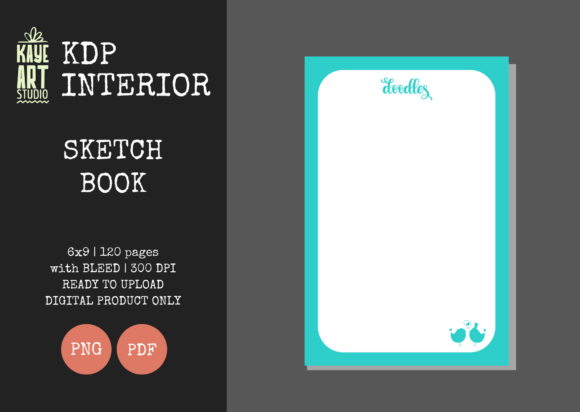
The versatility of the PNG and PDF file formats included with this interior allows for customization before upload. If you are targeting a specific hobbyist group, you might consider adding niche-specific title pages or reference charts to the first few pages (ensuring bleed settings are respected). This level of customization turns a general sketchbook into a specialized tool. Observations from successful listings suggest that hyper-specific niches often outperform broad categories. A "Blue Botanical Sketchbook for Garden Planning" will likely face less competition and see higher conversion rates than a generic "Blue Sketchbook."
Technical Considerations for Seamless Publishing
While the creative possibilities are vast, the technical execution determines whether the KDP Sketchbook Blue results in a high-quality product. The listing specifies BLEED settings, which is a critical detail. Many publishing errors occur when creators assume a no-bleed layout. Because this interior includes bleed, your cover design must extend 0.125 inches beyond the trim line on all sides. Failing to account for this will result in white borders or cropped artwork after printing.
The 300 DPI quality standard is non-negotiable for sketchbooks. Users intend to draw on these pages, meaning they will be viewing the paper texture and any printed elements at close range. Low-resolution interiors appear pixelated and cheap, leading to negative reviews that tank visibility. Since the files have been tested on KDP, you can trust the baseline dimensions, but you must still verify your own cover file against the current KDP template generator. Paper shifts can occur, and what worked six months ago may need slight adjustments today.
Navigating the Interior-Only Model
A common point of confusion for new publishers is the distinction between full manuscripts and interior-only listings. This resource provides only the interior files. You are responsible for creating, sourcing, or commissioning a cover that matches the 6x9 trim size and bleed requirements. This separation of assets is actually a strength. It prevents your book from looking identical to dozens of others using the same stock cover.
When designing your cover, consider the interplay with the blue interior. A cover that clashes with the internal color scheme creates a disjointed user experience. Previewing the interior pages before finalizing the cover ensures visual harmony. Additionally, because you are providing the exterior branding, your metadata and description must accurately reflect the interior's nature. Clearly state that this is a sketchbook with blue-toned pages to manage customer expectations. Transparency reduces returns and builds trust with buyers who are specifically seeking this aesthetic.
Evaluating Fit for Your Publishing Portfolio
Not every low-content book needs a colored interior, and not every audience wants one. Before integrating KDP Sketchbook Blue into your catalog, assess whether the added visual element serves a purpose. White paper remains the industry standard for pure drawing because it offers maximum contrast for graphite and ink. Blue interiors are best positioned as thematic or functional alternatives rather than direct replacements for traditional sketchpads.
Consider the printing costs as well. Standard black and white interiors on white paper are the most economical. Introducing color or specific tinted backgrounds can sometimes affect royalty margins depending on current KDP pricing structures. Run the numbers to ensure your price point remains competitive within your chosen niche. If the blue interior allows you to charge a premium due to perceived value or niche specificity, the margin difference may be justified. However, if you are competing solely on price in a race-to-the-bottom category, a specialized interior might not offer the necessary ROI.
Ultimately, the KDP Sketchbook Blue is a tool for differentiation. In a marketplace flooded with generic options, specificity wins. Whether serving a student needing a field log, a professional mapping out a user journey, or an individual seeking a calming space for visual reflection, this interior provides the foundation for a meaningful product. Success comes from matching these practical capabilities with thoughtful cover design and accurate marketing, ensuring the right reader finds exactly what they need.