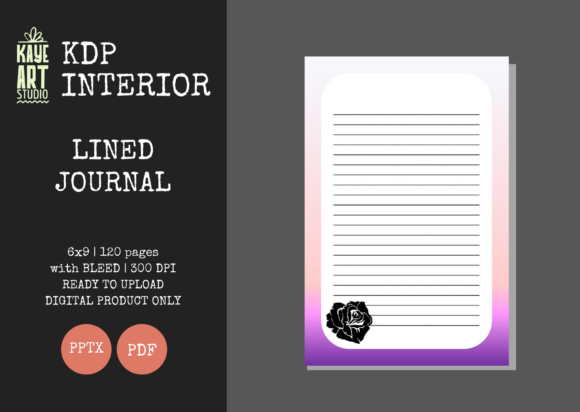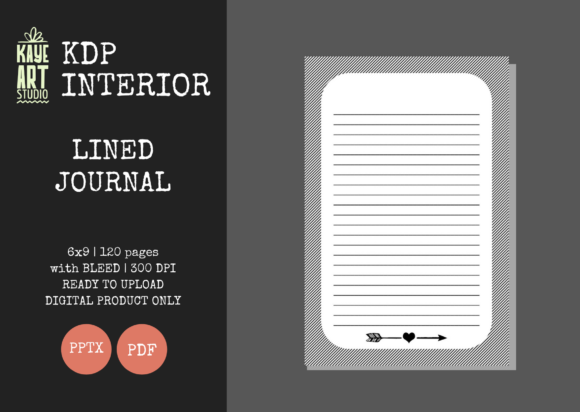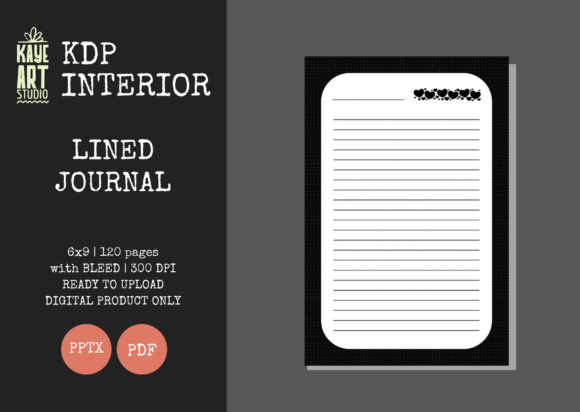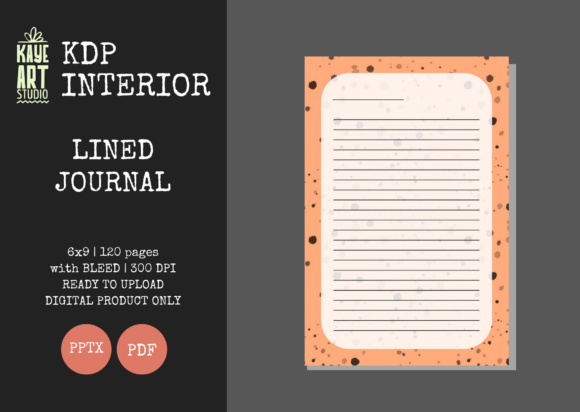
KDP Lined Journal 22: Streamlining Low Content Publishing
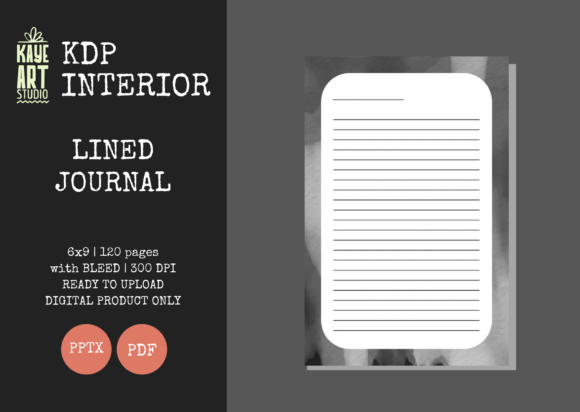
Building a sustainable portfolio on Amazon KDP requires balancing creative output with operational efficiency. For publishers focusing on low-content books, the interior file is often the bottleneck that slows down production. KDP Lined Journal 22 addresses this friction point by providing a pre-formatted, tested foundation that eliminates technical guesswork. This specific template is designed for creators who need a reliable 6x9 inch lined journal without spending hours adjusting margins or verifying bleed settings. By utilizing a professionally prepared interior, you shift your focus from formatting mechanics to niche research and cover design, which are the true drivers of sales in the current marketplace.
Technical Precision and Upload Confidence
The most common cause of rejection or poor customer reviews in low-content publishing is improper file setup. KDP Lined Journal 22 mitigates this risk through rigorous pre-testing. The file comes with bleed settings already configured, a critical detail that many new publishers overlook. When uploading this interior to KDP, you must select the "BLEED" option in the print settings to ensure the lines extend correctly to the edge of the page. Failing to make this selection can result in unwanted white borders or trimmed content.
Beyond the bleed configuration, the template maintains a standard 120-page count at 300 DPI resolution. This specification hits the sweet spot for paperback journals; it provides enough substance to feel valuable to the customer while keeping printing costs low enough to maintain healthy royalty margins. The 300 DPI quality ensures that lines print crisply without pixelation or blurriness, which is essential for maintaining professional standards. Because these files have been tested specifically for KDP compliance, you avoid the trial-and-error phase that often accompanies creating interiors from scratch using generic word processing software.
Leveraging Editable PPTX Files for Customization
While PDF is the industry standard for final upload, the inclusion of an editable PowerPoint (PPTX) file with KDP Lined Journal 22 offers significant strategic advantages. Static PDFs lock you into a single design, but the PPTX format allows for rapid iteration. If you identify a micro-niche that requires a slight modification—such as adding a "This Book Belongs To" page, changing the line spacing for handwriting practice, or inserting motivational quotes every ten pages—you can do so directly in PowerPoint without needing advanced graphic design software like InDesign or Affinity Publisher.
This editability supports a more agile publishing workflow. Entrepreneurs and marketers can test different interior variations against the same cover design to see what resonates with their audience. Educators creating composition notebooks for students can adjust the header space to accommodate name and date fields. The ability to customize the master slide means changes apply globally across all 120 pages instantly, preserving consistency while saving hours of manual formatting. This flexibility transforms a static asset into a dynamic tool for portfolio expansion.
Strategic Time Allocation for Publishers
In the low-content business model, volume and relevance matter. Every hour spent manually setting up guide lines and margins is an hour not spent on keyword research, competitor analysis, or cover creation. KDP Lined Journal 22 serves as an infrastructure asset that reclaims this time. For freelancers and small business owners managing multiple titles, this efficiency compounds. Instead of reinventing the wheel for every new journal listing, you establish a consistent baseline quality that customers can trust.
Consider the opportunity cost of formatting errors. A poorly formatted interior leads to returns and negative reviews, which damages your account health and organic ranking. By starting with a verified template, you protect your brand reputation. This is particularly relevant for professionals transitioning into self-publishing who may not have a background in print layout. The template acts as a guardrail, ensuring that even your first publication meets industry standards for trim size and safe zones.
Ideal Use Cases and Audience Fit
This specific interior configuration is best suited for creators targeting general writing, note-taking, and diary niches. The 6x9 trim size is portable and versatile, making it appropriate for travel journals, meeting notebooks, gratitude diaries, and school composition books. Bloggers and content creators looking to monetize their audience through physical products will find this size aligns well with merchandise expectations. It is substantial enough to be perceived as a real book rather than a pamphlet, yet compact enough for daily carry.
However, it is important to recognize where this template fits within a broader strategy. While excellent for standard lined journals, it may not be suitable for specialized formats like graph paper, music notation, or logbooks requiring specific data tables. Publishers should view KDP Lined Journal 22 as a core component of their catalog rather than a universal solution. It excels when paired with strong, niche-specific cover art. Since this listing provides the interior only, your success depends entirely on how effectively you pair this functional foundation with compelling external branding. The interior handles the utility; your cover must handle the conversion.
Navigating Limitations and Best Practices
To maximize the value of this asset, users must understand its boundaries. As noted, this is an interior-only product. You cannot simply upload this file and expect sales without investing equal effort into cover design. The market for generic lined journals is saturated; profitability comes from specificity. Use the editable PPTX file to tailor the interior to match the promise made on your cover. If your cover suggests a "Shadow Work Journal," consider adding prompting sections or reflection spaces using the editable source file to differentiate your product from thousands of identical blank notebooks.
Additionally, always verify your final exported PDF before upload, even when using a pre-tested template. Software updates or export settings can occasionally alter dimensions. Open your final file in a PDF viewer and measure the page size to confirm it remains exactly 6x9 inches with proper bleed allowance. Check the first and last few pages to ensure no elements have shifted during the export process. These thirty seconds of verification prevent days of frustration.
For educators and coaches planning bulk orders or direct sales outside of Amazon, the 300 DPI quality ensures the file remains sharp even if printed locally. However, be aware that local printers may have different bleed requirements than KDP. Always request a proof copy from KDP before ordering author copies for events or gifts. Seeing the physical product confirms that the line weight and paper opacity meet your expectations. Standard cream or white paper on KDP works well with this template, but the visual experience differs between the two. White paper typically offers higher contrast for black lines, while cream reduces glare for evening journaling. Understanding these nuances helps you write better product descriptions and set accurate customer expectations.
Building a Cohesive Brand Identity
Consistency builds recognition. Using KDP Lined Journal 22 as your standard interior allows you to develop a signature look across multiple titles. When customers buy one of your journals and appreciate the line spacing, page count, and overall feel, they are more likely to purchase future titles from your catalog. This reliability is difficult to achieve if you use different templates or formatting methods for every book. The editable nature of the PPTX file lets you add subtle branding elements, such as a small logo on the bottom corner or a consistent font choice for headers, reinforcing your publisher identity without disrupting the user experience.
Ultimately, this template represents a balance between automation and craftsmanship. It automates the tedious technical specifications that must be correct for a book to print successfully, freeing you to apply craftsmanship to the aspects that drive discovery and sales. Whether you are a hobbyist exploring self-publishing or a marketer scaling a digital product business, treating your interior files as standardized assets rather than disposable tasks creates a stronger foundation for long-term growth. The goal is not just to publish a book, but to build a library of high-quality resources that serve specific reader needs efficiently and professionally.