Mastering KDP Dot Grid Interiors: A Complete Guide to 6x9 No-Bleed Journals
The rise of self-publishing has democratized the book industry, allowing creators to build sustainable businesses with minimal upfront investment. Among the most popular niches in Amazon’s Kindle Direct Publishing (KDP) ecosystem is the low-content book market. Specifically, dot grid journals have emerged as a staple for entrepreneurs looking to provide value without writing thousands of words. Understanding the technical and practical nuances of products like the KDP Dot Grid Paper 76 and KDP Interiors Dot Grid Paper is essential for anyone serious about this business model.
While the concept of a "simple dot grid journal" sounds straightforward, success lies in the details. From trim sizes and bleed settings to file formats and resolution, every specification matters. This guide explores why these specific interior templates are significant, how they fit into modern productivity trends, and how to leverage them effectively for a no-content or low-content KDP business.
The Enduring Appeal of Dot Grid Paper
To understand why dot grid interiors sell, one must first understand their utility. Unlike lined paper, which dictates horizontal writing, or blank paper, which can feel unstructured, dot grid paper offers a unique middle ground. The subtle dots serve as guides for straight lines, geometric shapes, and handwriting practice without being visually intrusive.
In modern life, this versatility translates across multiple demographics:
- Bullet Journalers: The primary audience for dot grid notebooks. They use the dots to create custom trackers, calendars, and layouts that adapt to their daily needs.
- Students and Educators: Ideal for STEM subjects where graphing, diagramming, and note-taking often coexist on the same page.
- Designers and Architects: Professionals who need to sketch concepts quickly while maintaining proportion and scale.
- Mindfulness Practitioners: Used for art therapy, mandala drawing, and structured meditation logging.
When you upload a high-quality interior like the KDP Dot Grid Paper 76, you are not just selling paper; you are selling a tool for organization, creativity, and mental clarity. Recognizing this purpose helps in crafting better metadata, descriptions, and eventually, cover designs that resonate with buyers.
Technical Specifications: Why 6x9 and No Bleed Matter
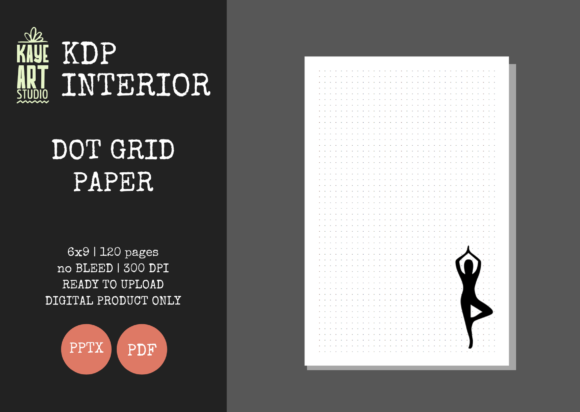
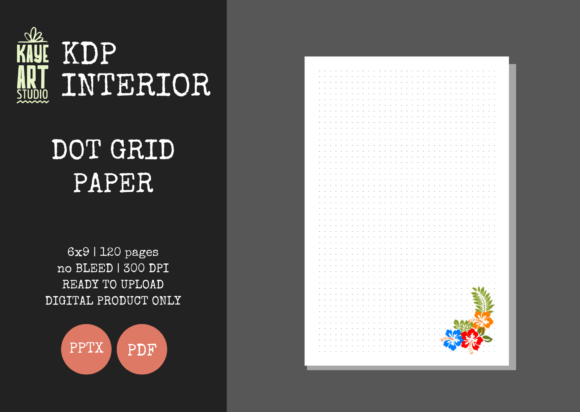
One of the most common pitfalls for new KDP publishers is selecting the wrong specifications. The KDP Interiors Dot Grid Paper discussed here comes with precise parameters that are optimized for both profitability and user experience.
The Strategic Advantage of 6x9 Inches
The 6x9 inch trim size is widely considered the gold standard for trade paperbacks and journals. It strikes a perfect balance between portability and usability. A 6x9 journal fits easily into backpacks, purses, and desk organizers, making it an everyday carry item. From a business perspective, this size also offers favorable printing costs on KDP, allowing for competitive pricing while maintaining healthy royalty margins. Larger sizes like 8.5x11 have their place, but 6x9 remains the volume leader for personal journals.
Understanding No Bleed Settings
This specific interior template utilizes NO BLEED settings. For beginners, "bleed" refers to content that extends beyond the edge of the page and is trimmed off during printing. While bleed is necessary for full-page illustrations, it adds complexity to formatting and increases the risk of rejection if margins are incorrect.
A no-bleed dot grid interior keeps all content safely within the safe zone. This ensures that the dot pattern remains consistent and centered on every page, regardless of minor printing variances. For a 120-page journal, this consistency is crucial for customer satisfaction. It also simplifies the creation process, as you do not need to account for extra margin space when designing your cover or modifying the interior.
File Quality and Format: Ensuring Professional Results
In the digital product space, quality is non-negotiable. Customers expect crisp, clean lines, even in low-content books. The KDP Dot Grid Paper 76 template addresses this through two critical technical features: 300 DPI resolution and dual file formats.
The Importance of 300 DPI
Dots per inch (DPI) determines print clarity. Web images typically use 72 or 96 DPI, which looks pixelated when printed. KDP requires a minimum of 300 DPI for professional-quality prints. Using a pre-tested 300 DPI file eliminates the guesswork. When the dots are sharp and uniform, the journal feels premium. Blurry or faint dots are a leading cause of negative reviews in the low-content niche, so starting with verified high-resolution files protects your brand reputation.
PPTX vs. PDF: Flexibility Meets Reliability
This listing provides both PPTX (PowerPoint) and PDF files, each serving a distinct purpose:
- PDF Files: These are ready for immediate upload. They have been tested on KDP to ensure they pass automated review checks. If you want to launch quickly without modifications, the PDF is your safest route.
- PPTX Files: These offer editability. Perhaps you want to add a "This Book Belongs To" page, insert motivational quotes every ten pages, or adjust the dot spacing slightly. PowerPoint is accessible to most users and allows for customization without requiring expensive design software like Adobe InDesign.
Having both formats empowers publishers to choose between speed and customization, accommodating both beginners and experienced sellers who want to differentiate their products.
Common Misunderstandings in Low-Content Publishing
Despite the accessibility of tools like KDP Dot Grid Paper, several misconceptions persist that can hinder success. Addressing these early saves time and prevents account issues.
"Interior Only" Means You Must Create a Cover
A frequent point of confusion is assuming that purchasing an interior template includes a cover. This listing is for INTERIOR only. KDP requires covers and interiors to be uploaded as separate files because they have different dimensional requirements based on page count and paper type. You must design or commission a cover that matches the 6x9 no-bleed specifications. Fortunately, the standardized nature of this interior makes cover creation predictable.
All Dot Grids Are Identical
Not all grids are created equal. Spacing varies between 4mm, 5mm, and 6mm. Some dots are dark; others are barely visible. The "Dot Grid Paper 76" designation likely refers to a specific spacing or style variant. Understanding exactly what you are selling allows you to describe it accurately. If customers expect standard 5mm bullet journal spacing and receive something else, returns increase. Always verify the specific characteristics of your chosen template before publishing.
Upload Without Testing Is Safe
Even though this product states "Files has been tested on KDP," it is best practice to always order a proof copy or use KDP’s Previewer tool before hitting publish. Screen rendering differs from physical print. Checking the physical alignment, dot darkness, and page turnover experience ensures the final product meets your standards.
Integrating Dot Grid Journals Into a Broader Business Strategy
A single dot grid journal is a product; a collection of thoughtfully designed journals is a business. Here is how this specific interior fits into a larger strategy:
- Niche Differentiation: Use the editable PPTX file to create variations. A plain dot grid competes with millions of others. A dot grid tailored for nurses, teachers, or gardeners (via added title pages or niche-specific prompts) targets specific keywords with less competition.
- Series Creation: The 120-page count is ideal for quarterly journals. Market them as part of a set (e.g., "2024 Quarterly Planning Series"). Consistent interiors build brand recognition.
- Cross-Promotion: Link related journals in your back matter. If a customer buys a basic dot grid, they might also be interested in a specialized tracker or sketchbook from your catalog.
- Educational Content: Create blog posts, videos, or social media content showing how to use dot grid paper effectively. This builds E-E-A-T (Experience, Expertise, Authoritativeness, Trustworthiness) and drives organic traffic to your listings.
Final Thoughts on Quality and Compliance
The KDP Dot Grid Paper 76 and similar no-bleed interiors represent more than just digital files; they are foundational building blocks for a legitimate publishing business. By understanding the significance of 6x9 sizing, the safety of no-bleed formatting, and the necessity of 300 DPI quality, publishers can avoid common pitfalls and deliver products that customers genuinely value.
Remember that in the low-content space, the barrier to entry is low, but the barrier to success is quality. Utilizing professionally tested, editable, and correctly specified interiors gives you a significant advantage. Whether you are creating your first journal or expanding an existing catalog, prioritizing technical accuracy and user utility will always yield better long-term results than rushing to publish generic content. Take the time to customize, test, and understand your product, and your dot grid journals will stand out in an increasingly crowded marketplace.