Streamlining KDP Publishing with a Pre-Formatted Vital Signs Log Book Interior
For self-publishers in the low-content and medium-content niche, time is often the most significant bottleneck. Creating a functional, compliant, and aesthetically pleasing interior for medical or health tracking journals requires precision that goes beyond simple graphic design. The KDp Vital Signs Log Book addresses this specific friction point by providing a professionally structured interior that is ready for immediate use. This resource is not merely a template; it is a production-ready asset designed to meet Amazon’s stringent printing specifications while serving a practical need for healthcare professionals, caregivers, and patients.
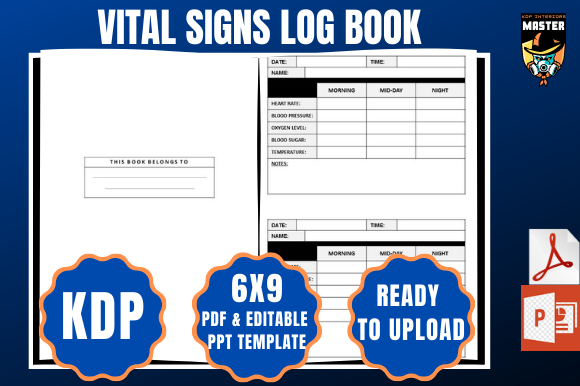
When evaluating digital assets for Kindle Direct Publishing, the primary concern is always compliance. A file that looks perfect on a screen can fail during the upload process if margins, bleed settings, or resolution are incorrect. This specific log book interior eliminates the guesswork. It arrives as a high-quality PDF formatted specifically for 6x9 inch dimensions with bleed enabled. This ensures that any design elements extending to the edge of the page print correctly without unwanted white borders or content being trimmed off. For publishers who have faced rejection emails from KDP’s automated review system, having a pre-validated 100-page interior provides peace of mind and accelerates the path to publication.
Technical Specifications and Print Compliance
The technical foundation of any successful KDP paperback lies in its adherence to printing guidelines. This vital signs tracker is engineered with the specific constraints of Amazon’s print-on-demand technology in mind. The 6x9 inch trim size is arguably the most versatile format for medical log books. It is compact enough to fit into a lab coat pocket, a nurse’s station organizer, or a bedside drawer, yet it offers sufficient surface area for recording detailed data points without cramping handwriting.
Critical to this product is the "Bleed On" setting. In log book design, tables and grid lines often extend to the very edge of the paper to maximize writing space. If a file is uploaded without proper bleed allowance, KDP will either reject the file or shrink the content to fit safe margins, ruining the layout. This PDF includes the necessary 0.125-inch bleed extension on all sides. Furthermore, the 100-page count hits a sweet spot for spine width and perceived value. It is substantial enough to justify a competitive price point and allow for months of tracking, but thin enough to remain portable and cost-effective to print.
The Advantage of Dual File Formats
While the deliverable includes a finalized PDF for direct upload, the inclusion of an editable PowerPoint file significantly expands the utility of this product. Most KDP interiors are sold as static PDFs, locking the publisher into a single design. The PowerPoint source file transforms this from a single product into a potential series.
- Customization: Publishers can adjust column headers to target specific niches, such as changing "Blood Pressure" to "Glucose Levels" or "Peak Flow" without redesigning the entire page.
- Branding: Add unique logos, disclaimers, or introductory pages to differentiate your listing from competitors using similar base templates.
- Series Creation: Use the master file to create variations for different medical specialties, effectively multiplying your catalog output from a single purchase.
- Error Correction: While the file is quality-checked, having source access allows for future updates or personal preferences regarding font styles or line weights.
Functional Design for Health Tracking
Beyond technical compliance, a log book must be functionally superior to loose paper or generic notebooks. The layout of this KDp Vital Signs Log Book reflects an understanding of clinical workflows and home care routines. Effective vital sign tracking requires more than just blank lines; it demands structured data entry fields that prompt consistency. A well-designed interior reduces cognitive load for the user, making it easier to maintain the habit of recording essential health metrics.
The 100 pages are optimized for repetitive daily or weekly entries. In medical contexts, clarity is paramount. The spacing between rows accounts for various handwriting sizes, ensuring that entries do not overlap—a common frustration with poorly designed trackers. Whether used by a nursing student learning to chart accurately, a caregiver monitoring an elderly relative’s hypertension, or a patient managing post-operative recovery, the structure supports accurate data capture. This functional reliability translates directly to better reviews and lower return rates for the publisher, as the end-user finds genuine value in the tool.
Integrating Into Modern Low-Content Workflows
The landscape of KDP publishing has shifted from quantity to quality. The era of uploading hundreds of generic, low-effort notebooks is fading. Successful publishers now focus on niche-specific utility and professional presentation. This vital signs log book fits seamlessly into a modern, quality-first workflow. Instead of spending 20 hours designing tables, testing margins, and proofreading headers, a publisher can allocate that time to keyword research, cover design, and marketing.
Consider the scenario of a publisher targeting the "home health aide" niche. Research indicates a demand for durable, pocket-sized tracking tools. By utilizing this pre-formatted interior, the publisher can move from concept to live listing in a matter of hours rather than weeks. The instant download nature of the product means there is no waiting period; the moment the decision is made to enter the niche, the production phase is essentially complete. This agility allows publishers to capitalize on trending health topics or seasonal demands, such as flu season monitoring or new year health resolutions, with minimal lead time.
Quality Assurance and User Experience
The mention of "100 Check Quality" is not merely marketing copy; it represents a critical step in the digital product ecosystem. In the KDP space, interior errors are costly. A misaligned table or a margin violation discovered after ordering a proof copy results in wasted money and delayed launches. This product has undergone rigorous validation against current KDP standards. For the buyer, this serves as a risk mitigation strategy.
From the end-user perspective, quality manifests in usability. Paper choice and ink absorption are determined by KDP, but the designer controls line weight and contrast. Lines that are too dark can make the page look cluttered and intimidating; lines that are too light may not scan well or could be hard for users with visual impairments to see. This log book strikes the necessary balance, providing clear guidance for writing while maintaining a clean, professional appearance. This attention to detail distinguishes premium KDP products from amateur submissions.
Strategic Considerations for Publishers
Before integrating this interior into a publishing strategy, it is important to understand what this product is and is not. This is strictly an interior file. The success of the final book still depends heavily on external factors. Publishers must invest effort into creating a compelling cover that signals professionalism and trustworthiness. Medical log books require a cover aesthetic that balances clinical authority with approachability.
Additionally, while the PowerPoint file allows for modification, publishers should respect intellectual property and marketplace saturation. Simply uploading the file as-is without any customization may result in duplicate content issues if many other sellers do the same. Utilizing the editable features to create a unique version is not just recommended for differentiation; it is often necessary for long-term account health. Adding a unique introduction page, customizing the title page, or adjusting the tracking parameters creates a distinct product that offers specific value to a targeted audience segment.
Ultimately, the KDp Vital Signs Log Book serves as a foundational building block. It bridges the gap between technical printing requirements and practical healthcare utility. By handling the complex geometry of bleed settings and margin safety, it frees the creator to focus on the aspects of publishing that actually drive sales: niche selection, branding, and customer connection. For those looking to expand their portfolio into the health and wellness category, this ready-to-upload interior offers a reliable, efficient, and professional starting point that aligns with both platform standards and user expectations.