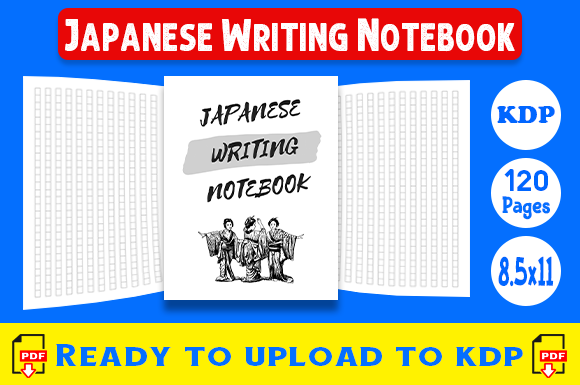
Evaluating the Japanese Writing Notebook for KDP Publishing and Language Practice
Selecting the right interior layout is a critical decision for both self-publishers on Amazon KDP and individuals seeking dedicated practice tools for Japanese literacy. The term "Japanese Writing Notebook" encompasses a specific category of structured paper designed to accommodate the unique spatial requirements of Hiragana, Katakana, Kanji, and Romaji. Unlike standard lined journals or generic composition notebooks, these interiors are engineered with precise grids that guide stroke order, proportion, and character balance. For publishers evaluating digital assets, understanding the technical specifications and pedagogical value of these layouts is essential for creating a viable product. For learners and educators, distinguishing between high-quality structured interiors and generic alternatives ensures that practice time translates effectively into muscle memory and legibility.
Distinguishing Features of Dedicated Japanese Interiors
A true Japanese Writing Notebook interior differs fundamentally from Western ruling systems. While standard college-ruled or wide-ruled paper provides horizontal baselines suitable for Latin alphabets, Japanese characters require two-dimensional guidance. High-resolution interiors typically feature one of three primary grid styles, each serving a distinct learning stage:
- Genkou Youshi (Manuscript Paper): Characterized by vertical columns of square boxes, often with a dotted cross in the center. This format is traditional for essay writing and advanced composition, enforcing strict character spacing and punctuation placement.
- Renchuucho (Practice Grids): Squares divided by diagonal or cross lines. These are specifically designed for beginners learning stroke order and balance. The internal guides help users center characters and maintain consistent proportions relative to the box size.
- Mixed Layouts: Modern notebooks often combine blank squares for free writing with guided grids for new vocabulary. Some include header sections for dates, titles, or vocabulary definitions, adding functional utility beyond simple repetition.
When evaluating a downloadable PDF for KDP or personal printing, verify that the grid lines are calibrated correctly. Standard practice boxes usually range from 15mm to 20mm for adult learners, while children’s resources may utilize larger 25mm+ grids. The line weight is equally important; guidelines should be visible enough to provide structure but light enough (often gray or light blue) not to distract from the ink of the written character. A high-resolution file ensures these fine lines remain crisp at the 8.5×11 trim size without pixelation or blurring during the printing process.
Comparing Structured Notebooks Against Generic Alternatives
Learners and publishers often weigh the necessity of specialized interiors against more accessible options. Understanding the tradeoffs helps determine when a Japanese Writing Notebook is the superior choice and when an alternative suffices.
Standard Lined Paper vs. Grid Systems
Standard lined paper is readily available and cost-effective, but it presents significant challenges for Japanese script. Without vertical boundaries, characters tend to drift or vary wildly in size. Horizontal lines only indicate the bottom baseline, offering no guidance for the top, left, or right margins of a Kanji character. For students focusing on calligraphy, stroke accuracy, or preparing for proficiency tests like the JLPT, lined paper often reinforces poor habits. However, for advanced learners who have already mastered proportion and simply need space for note-taking or journaling, standard lines or dot-grid paper may be preferable due to their versatility and lower cognitive load.
Digital Apps vs. Physical Notebooks
Language learning applications offer instant feedback and gamified practice, yet they lack the tactile reinforcement of physical writing. Research suggests that handwriting activates different neural pathways associated with memory retention compared to typing or tapping screens. A physical Japanese Writing Notebook provides a distraction-free environment that encourages deliberate practice. For KDP publishers, this distinction is a key selling point: the product serves users who specifically want to disconnect from digital devices and engage in focused, analog study. Conversely, apps excel at vocabulary drilling and pronunciation, areas where a static PDF interior cannot compete. The most effective learning strategies often integrate both, using the notebook for consolidation and the app for acquisition.
Pre-printed Books vs. Downloadable PDF Interiors
Consumers can purchase pre-bound Japanese practice books, but downloadable PDF interiors offer distinct advantages for specific use cases. A digital file allows users to print only what they need, select their preferred paper quality, and bind the pages according to personal preference. For KDP creators, a tested PDF eliminates the guesswork of margin settings and bleed requirements. The 8.5×11 trim size is particularly strategic; it offers ample surface area for large character practice while remaining compatible with standard home printers for those who wish to preview the product before purchasing the paperback edition. Pre-printed books, while convenient, lock the user into a specific paper type and binding style that may not suit every learner’s ergonomic needs.
Technical Considerations for KDP Upload and Print Quality
For those utilizing a Japanese Writing Notebook interior for publishing, technical compliance is non-negotiable. Even a pedagogically perfect layout will fail if the file specifications do not align with KDP’s printing standards. When sourcing or creating a PDF, several factors require verification:
- Trim Size Alignment: The 8.5×11 dimension is a standard US letter size, but KDP requires exact adherence to specified margins. Ensure the interior file includes appropriate gutter margins (typically 0.375” to 0.5” depending on page count) so that grid lines near the spine are not obscured by binding.
- Resolution and Line Clarity: Low-resolution files result in jagged or faint grid lines. Verify that the PDF is vector-based or exported at a minimum of 300 DPI. Test prints are essential; what looks sharp on a backlit screen may appear muddy on cream or white book paper.
- Bleed Settings: If the grid extends to the edge of the page, the file must include bleed. However, most Japanese writing notebooks utilize non-bleed interiors with safe margins to prevent content loss. Confirm whether the downloaded file is designated as "bleed" or "no bleed" and adjust KDP upload settings accordingly.
- Paper Color Compatibility: Grid lines optimized for white paper may lack sufficient contrast on cream paper, which is common for KDP workbooks. Evaluate the grayscale values of the guidelines to ensure visibility across both paper options.
Files described as "tested on KDP" generally indicate that these parameters have been validated, reducing the risk of rejection or poor customer reviews due to formatting errors. Nevertheless, ordering a proof copy remains the best practice for quality assurance.
Determining Fit: When to Choose This Resource
The decision to adopt or publish a Japanese Writing Notebook should be based on specific goals and user profiles. This resource is particularly well-suited for:
- Beginner to Intermediate Learners: Those actively building foundational literacy benefit most from guided grids. The visual scaffolding accelerates the development of consistent handwriting.
- Educators and Tutors: Printable PDFs allow instructors to create customized worksheets or supplementary practice materials without designing layouts from scratch.
- Niche Publishers: Creators targeting specific sub-niches (e.g., "Kanji Practice for JLPT N3" or "Japanese Calligraphy for Adults") can use high-quality base interiors to develop differentiated products quickly.
- Analog Journalers: Individuals maintaining bilingual journals or studying traditional arts often prefer the aesthetic and functional structure of Genkou Youshi over blank pages.
Conversely, this format may not be ideal for advanced native speakers who no longer require writing guides, travelers needing lightweight multi-purpose notebooks, or learners exclusively focused on conversational fluency without literacy goals. Additionally, publishers should recognize that the market for generic Japanese practice notebooks is competitive. Success often depends on pairing a quality interior with targeted metadata, clear cover design, and supplementary value such as instructional introductions or vocabulary lists that address specific learner pain points.
Making an Informed Selection
Whether you are a student committing to daily practice or a publisher expanding your catalog, the quality of the interior directly impacts the utility of the Japanese Writing Notebook. Prioritize files that demonstrate thoughtful design—appropriate grid sizing, balanced line weights, and correct technical specifications for the 8.5×11 format. Compare available options against your specific objectives: Does the grid style match the learner's current level? Is the file resolution sufficient for professional printing? Does the layout offer enough variety to sustain long-term engagement?
By critically evaluating these factors rather than defaulting to the first available option, users can secure a tool that genuinely supports language acquisition, and publishers can offer products that meet the rigorous expectations of the Japanese learning community. The right notebook does not teach the language itself, but it creates the structured environment necessary for effective, sustainable practice.