Evaluating KDP Dot Grid Paper 55 for Low-Content Publishing
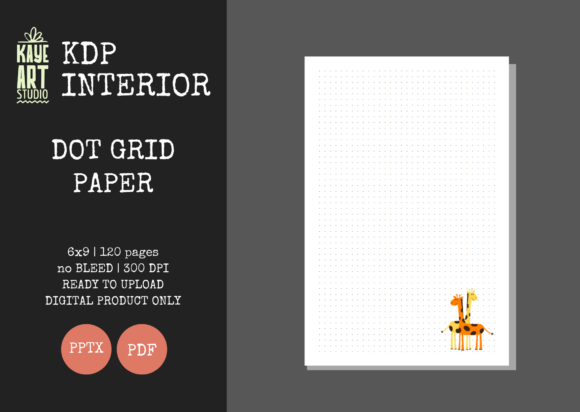
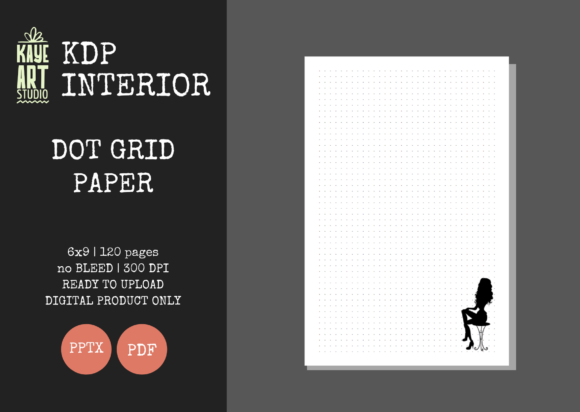
Selecting the right interior template is a foundational decision for any Amazon KDP publisher operating in the low-content or no-content niche. While covers attract initial attention, the interior dictates customer satisfaction, review quality, and long-term sales velocity. KDP Dot Grid Paper 55 represents a specific configuration designed to streamline the publishing process while adhering to platform technical standards. This resource provides a standardized 6x9 inch dot grid journal featuring 120 pages at 300 DPI with no bleed settings. Understanding the specific utility, limitations, and strategic fit of this asset is essential for publishers determining whether it aligns with their current catalog goals.
Defining the Asset Specifications
Before integrating KDP Dot Grid Paper 55 into a publishing workflow, it is necessary to understand exactly what the file entails. This product is strictly an interior file; it does not include cover art or cover templates. Publishers must source or create covers separately that match the precise trim size and page count specifications.
The technical parameters are configured for immediate compatibility with Amazon’s printing requirements:
- Trim Size: 6x9 inches, the industry standard for trade paperbacks and journals.
- Bleed Settings: No Bleed. All content is contained within safe margins, eliminating common rejection errors related to artwork extending beyond the trim line.
- Page Count: 120 pages. This thickness creates a spine width sufficient for text printing while keeping production costs moderate.
- Resolution: 300 DPI. Ensures crisp printing without pixelation or blurring on physical paper.
- File Formats: Includes both PDF (for direct upload) and PPTX (for editing).
The inclusion of an editable PowerPoint file distinguishes this asset from static PDF-only alternatives. It allows publishers to modify spacing, add branding elements, adjust dot opacity, or insert introductory pages without requiring advanced graphic design software like Adobe InDesign.
Strategic Benefits for Low-Content Publishers
The primary value proposition of KDP Dot Grid Paper 55 lies in efficiency and risk mitigation. For publishers managing large catalogs or testing new niches, speed to market is often a critical metric. Pre-formatted interiors eliminate the hours typically spent setting up document sizes, calculating gutter margins, and verifying DPI standards.
Furthermore, the "No Bleed" configuration significantly reduces technical friction. Bleed-related rejections are among the most common issues faced by new KDP publishers. By utilizing a no-bleed interior, the margin for error decreases substantially. The files have been tested on KDP, providing a layer of assurance that the upload will pass automated review processes, assuming the accompanying cover meets separate guidelines.
From a user experience perspective, dot grid paper occupies a versatile middle ground between lined notebook paper and blank sketch paper. It appeals to bullet journalists, designers, students, and professionals who require structure without rigidity. This broad appeal makes the 55-dot grid format a safer baseline investment than highly specialized templates that may only serve a micro-niche audience.
Tradeoffs and Practical Considerations
While efficient, relying on pre-made interiors like KDP Dot Grid Paper 55 involves inherent tradeoffs that must be weighed against business objectives. The most significant consideration is market saturation. Because these templates are accessible to many publishers, identical interiors appear across multiple listings. If a publisher uploads this interior without meaningful differentiation via the cover design, title optimization, or A+ Content, the book may struggle to stand out in search results.
Additionally, the fixed 120-page count limits flexibility. Some niches prefer thinner journals (80–100 pages) for portability, while others demand thicker volumes (150+ pages) for perceived value. Publishers cannot alter the page count of a pre-made PDF without rebuilding the file entirely. If your market research indicates that top-selling competitors in your target niche average 150 pages, a 120-page interior may place your product at a competitive disadvantage regarding price-to-value ratio.
The editable PPTX file offers customization potential, but it requires proficiency in PowerPoint. Users unfamiliar with master slides or alignment tools may find editing more time-consuming than anticipated. Furthermore, extensive modifications can inadvertently introduce formatting errors, negating the benefit of using a pre-tested file. Publishers should factor in the learning curve or time required for customization when calculating return on investment.
Ideal Use Cases and Strategic Fit
KDP Dot Grid Paper 55 is particularly well-suited for specific publishing scenarios. It serves as an excellent foundation for publishers entering the bullet journal or note-taking niche who need to validate demand before investing in custom interior design. The low barrier to entry allows for rapid A/B testing of cover designs and keywords.
This asset also fits well within bundle strategies or series creation. If you are building a brand around productivity or creative planning, having a consistent, reliable interior allows you to focus creative energy on developing cohesive cover aesthetics and marketing materials. The 6x9 size is universally accepted for travel journals, meeting notebooks, and daily planners, making it a versatile backbone for general-purpose stationery brands.
Publishers who lack access to professional design software will find the PPTX editability especially valuable. Being able to add a personalized "This Journal Belongs To" page, a table of contents, or subtle watermark branding transforms a generic commodity into a branded product without additional software licensing costs.
When to Consider Alternatives
Despite its utility, KDP Dot Grid Paper 55 is not the optimal solution for every project. Publishers targeting premium or luxury segments should consider custom-designed interiors. High-end customers often expect unique layouts, varied page structures, or higher paper quality indicators that generic templates cannot provide. In these cases, the cost of custom design is justified by higher price points and reduced direct competition.
If your niche requires specific functional elements—such as habit trackers, monthly calendars, prompt sections, or numbered indexes—a plain dot grid interior will be insufficient. Attempting to force a generic template into a functional niche often results in poor reviews and returns. Similarly, if market analysis shows that successful books in your category utilize bleed-edge designs or full-color interiors, this black-and-white no-bleed asset will not meet customer expectations.
Finally, publishers with established workflows in professional layout software may find the PPTX format restrictive. Converting between formats or working outside one’s preferred ecosystem can introduce inefficiencies. For experienced designers, creating a proprietary master template may offer better long-term scalability and uniqueness than adapting a shared resource.
Making the Final Decision
Evaluating KDP Dot Grid Paper 55 requires balancing operational efficiency against market differentiation. It excels as a reliable, technically compliant baseline for general-purpose journals and rapid market testing. The combination of tested PDF files and editable PPTX sources provides a practical balance of convenience and customization for intermediate publishers.
However, success depends less on the interior itself and more on how it is positioned. Publishers should view this asset as a component of a broader strategy rather than a standalone solution. Before purchasing or uploading, verify that the 120-page count and 6x9 dimensions align with competitor benchmarks in your specific sub-niche. Ensure your cover design and metadata strategy are robust enough to distinguish your listing from others using similar interiors. When aligned with realistic expectations and complementary marketing efforts, this dot grid interior can serve as a dependable element of a sustainable low-content publishing business.